Compiled by Laura Rozenberg and arranged by Jane Rosemarin
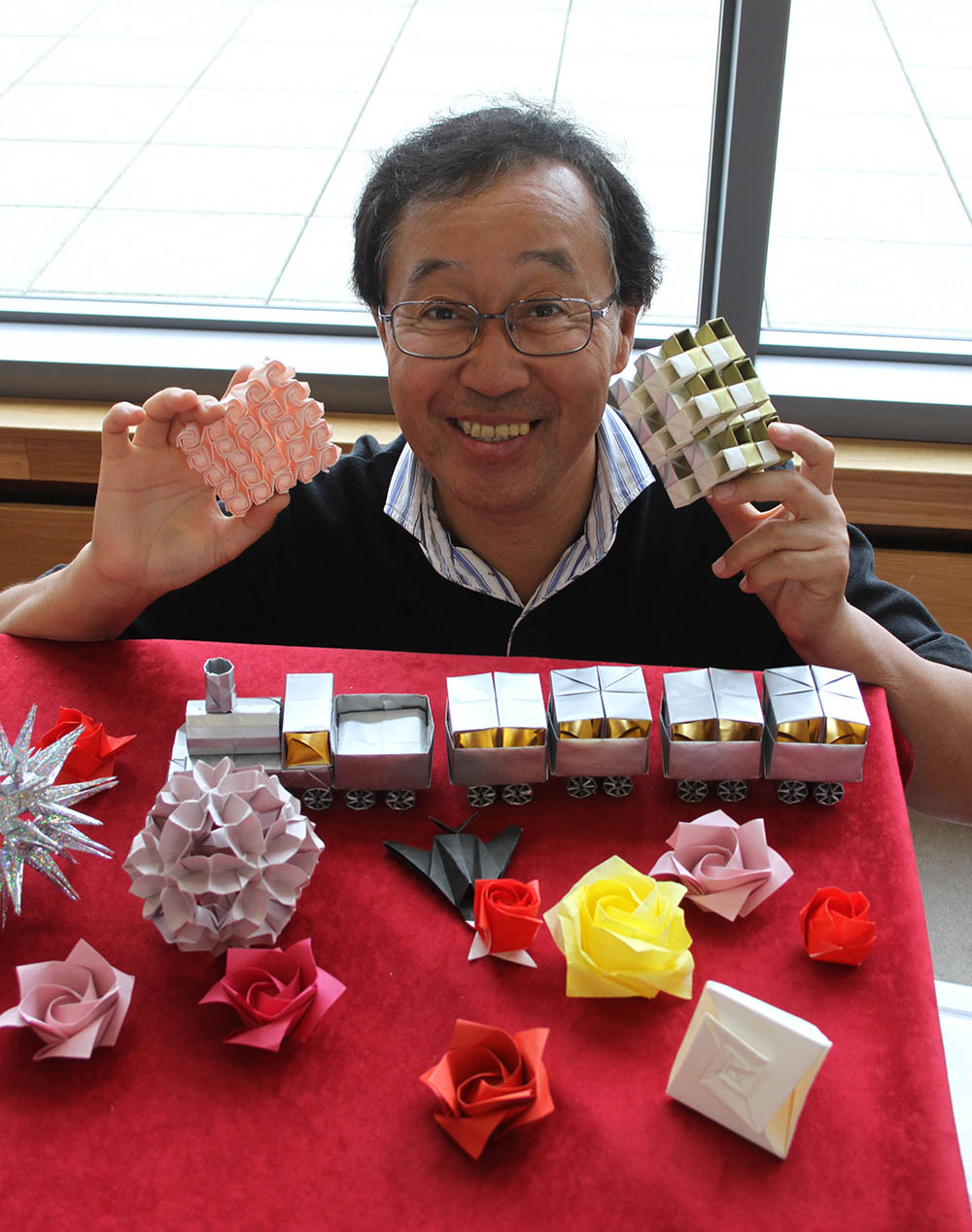
Toshikazu Kawasaki was a special guest at the 2013 British Origami Society convention in Edinburgh. Photo: Robin Macey.

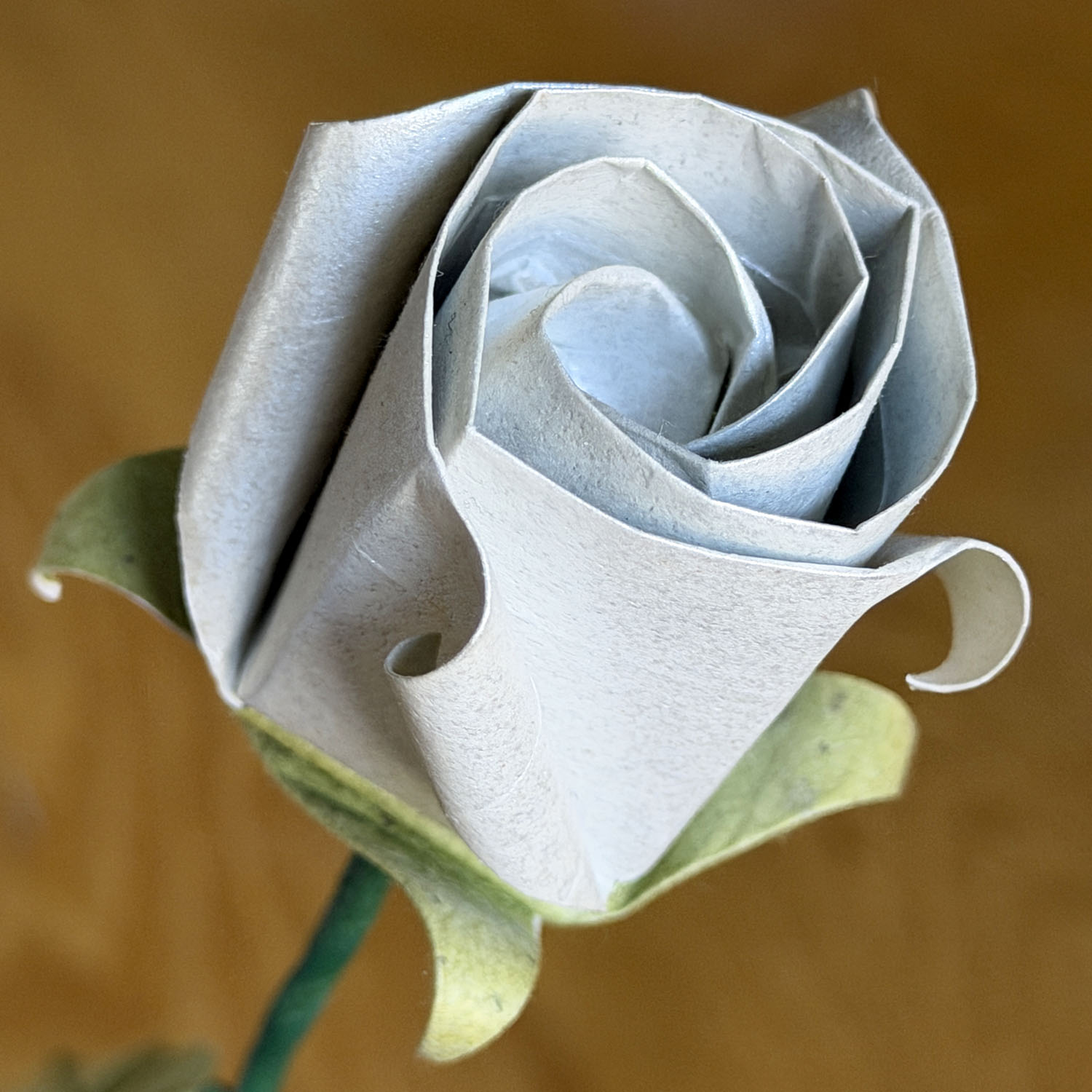
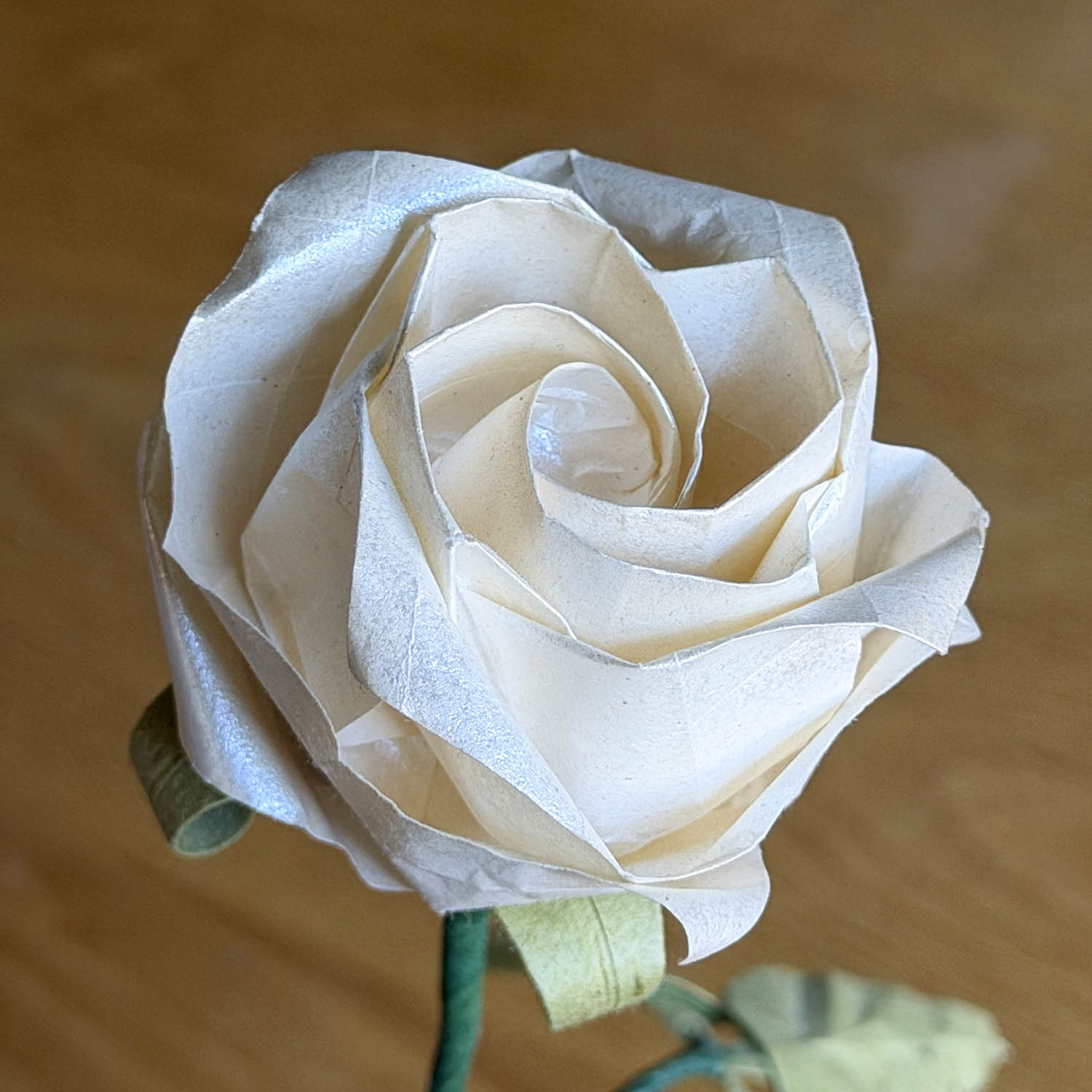
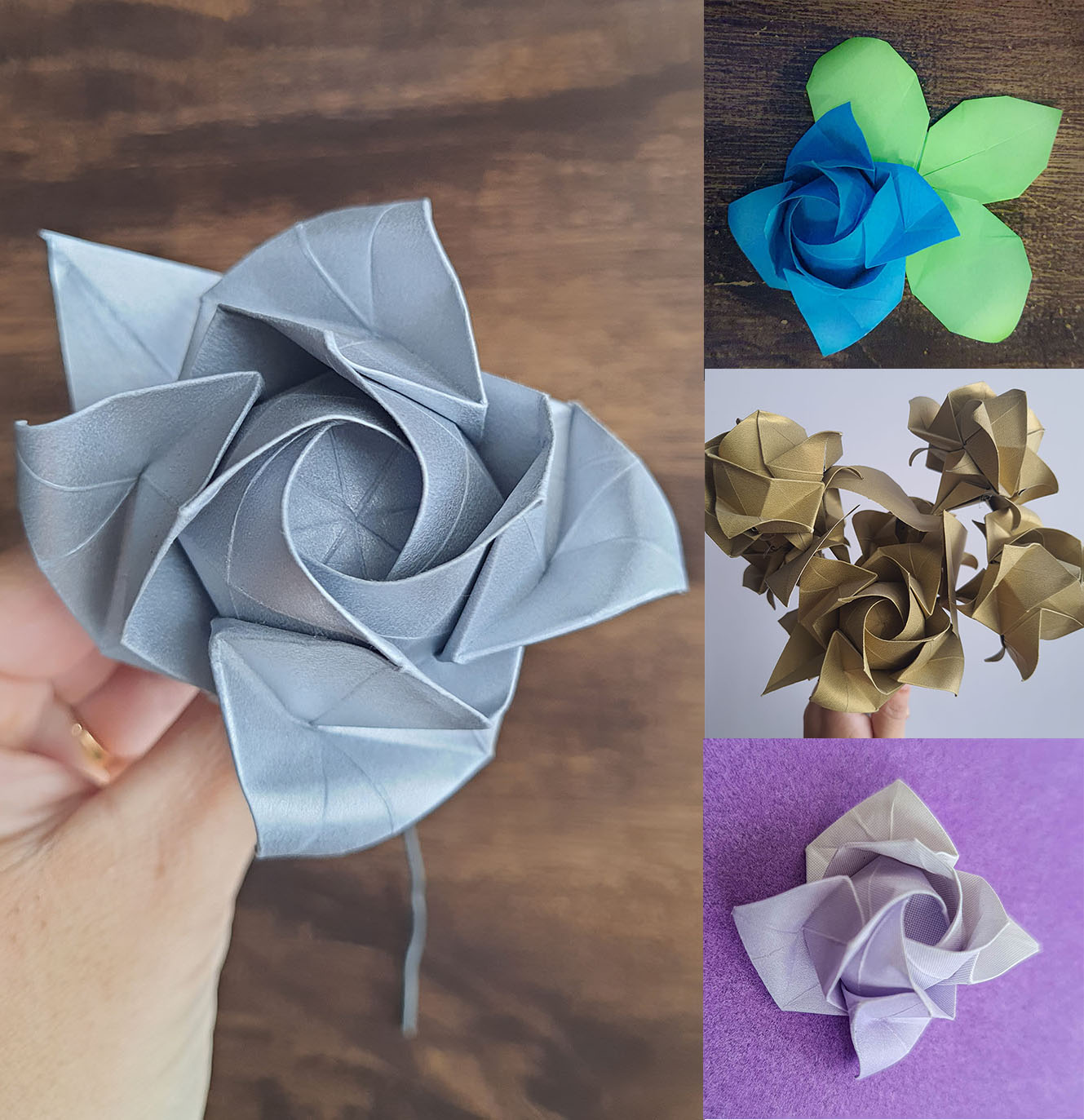
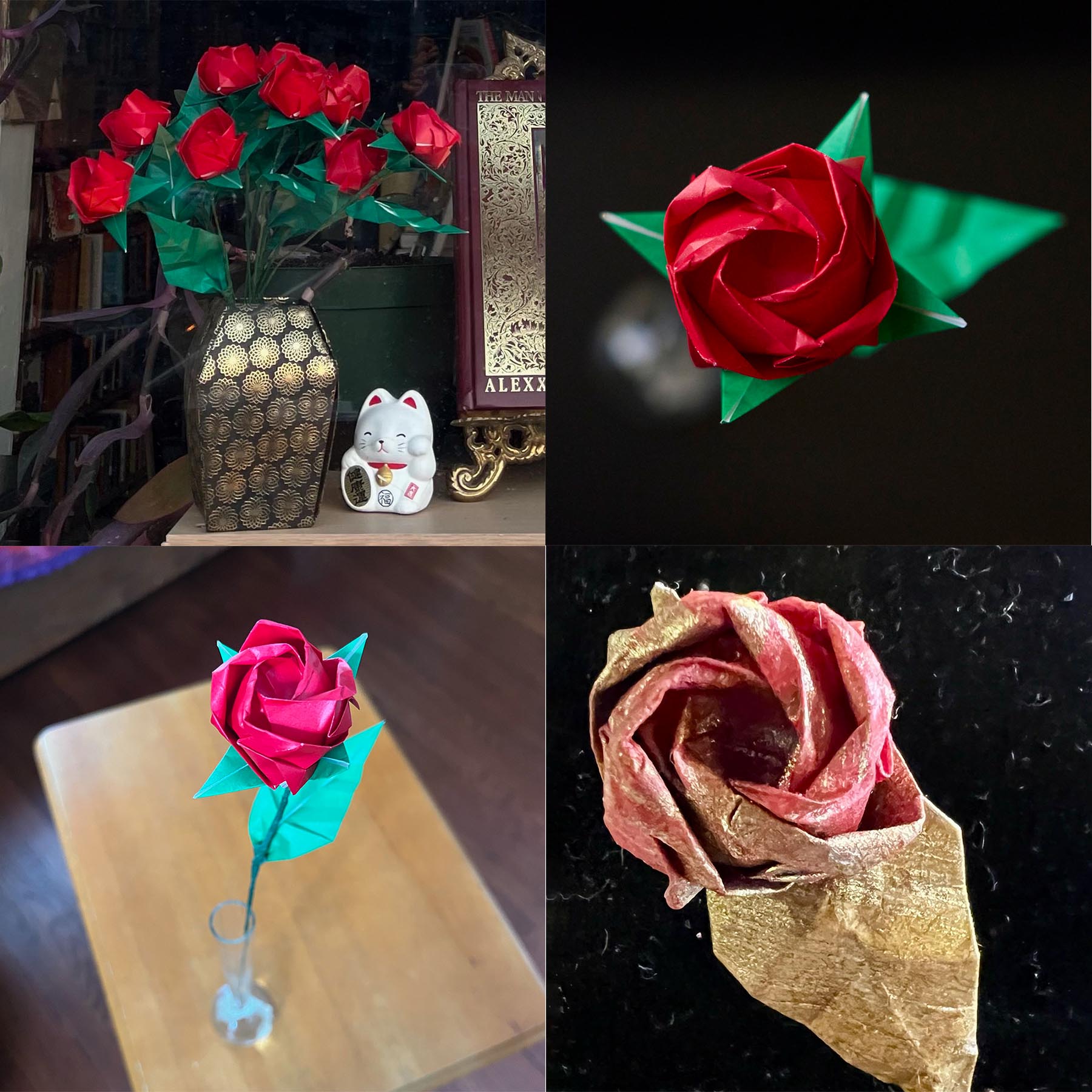
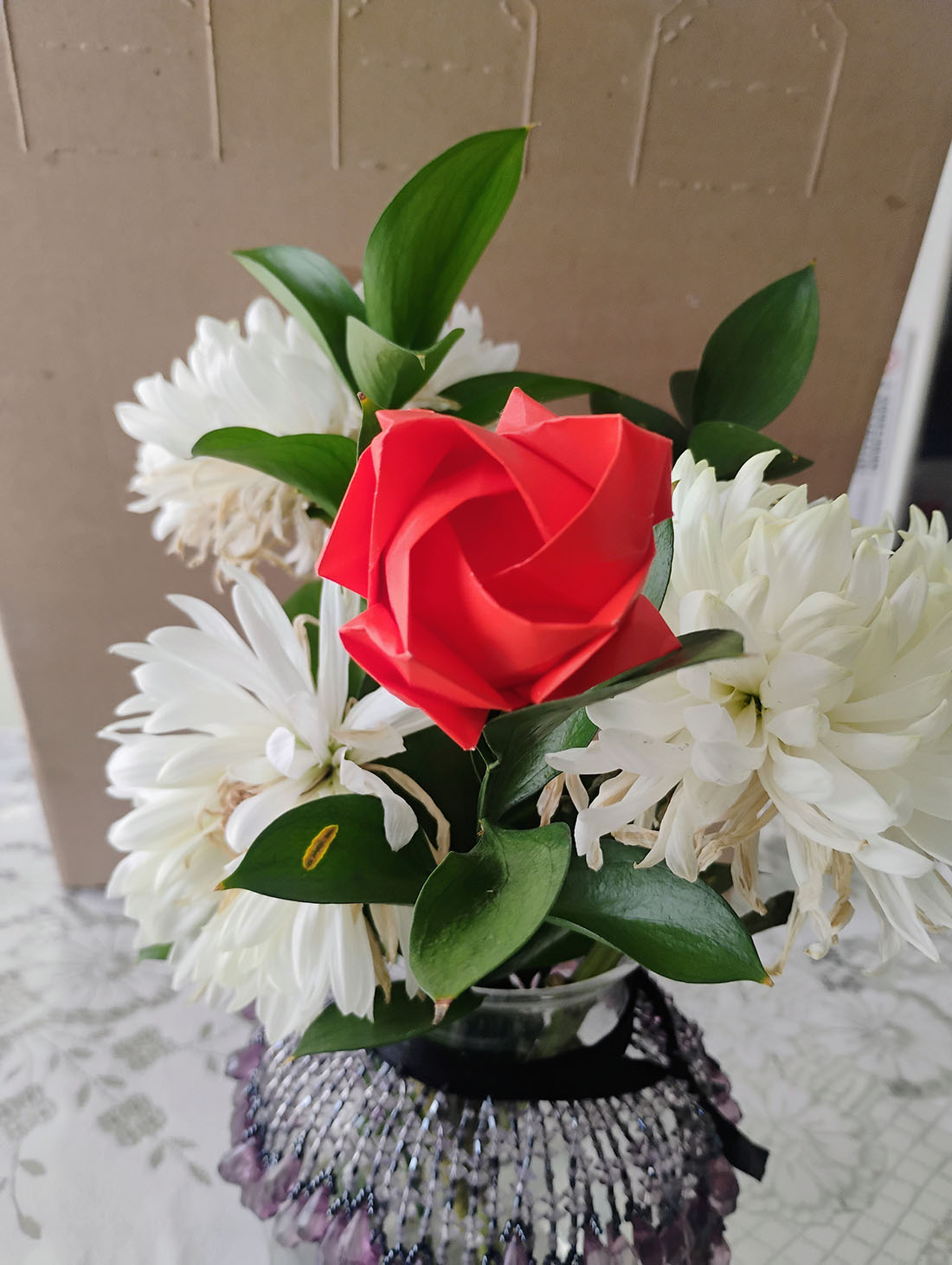
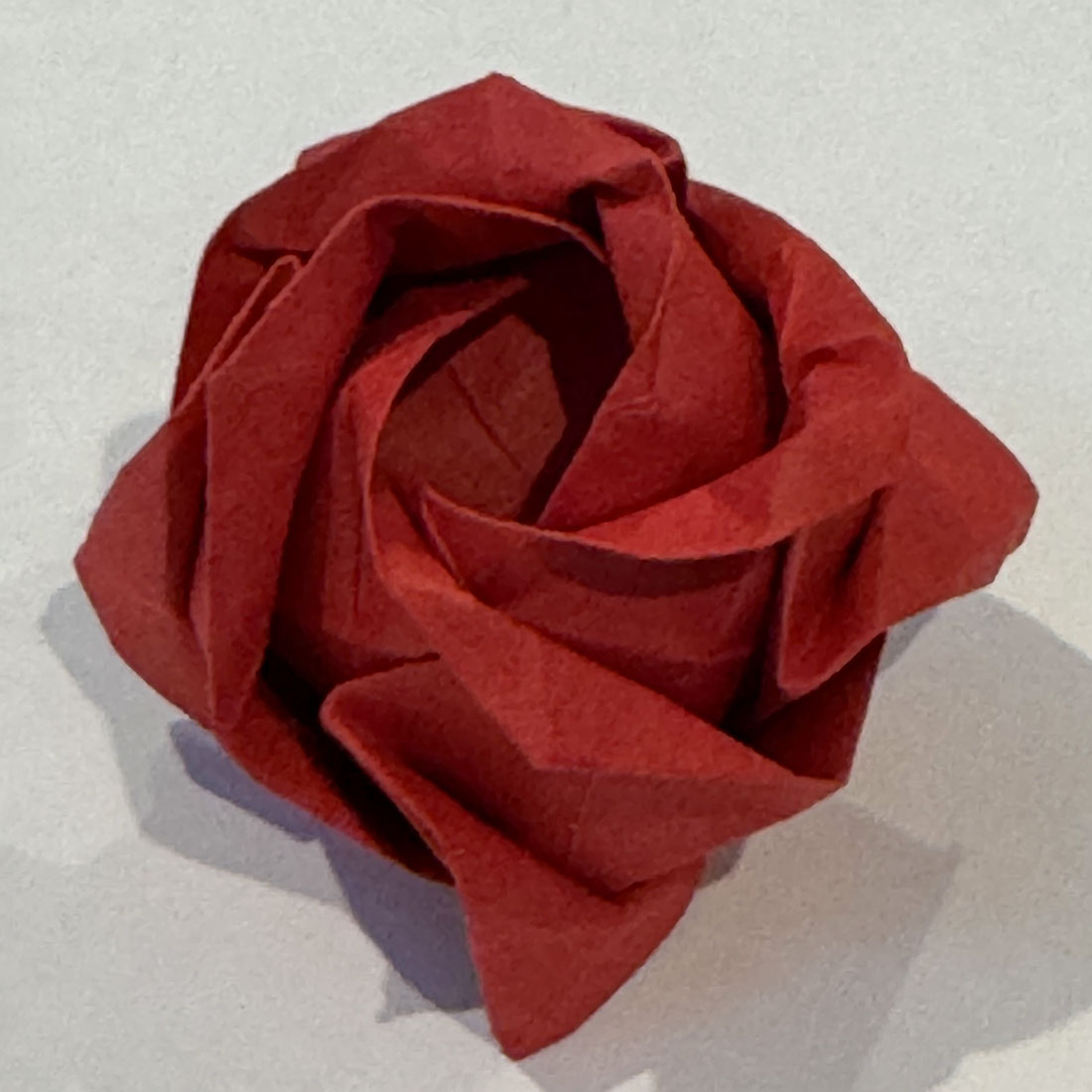
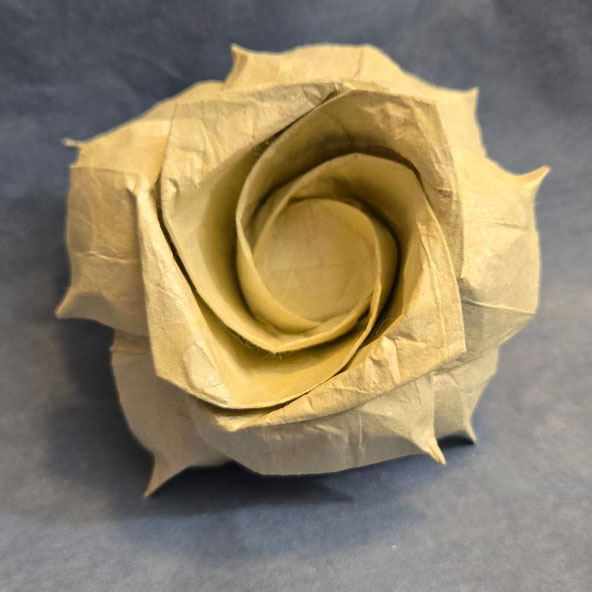
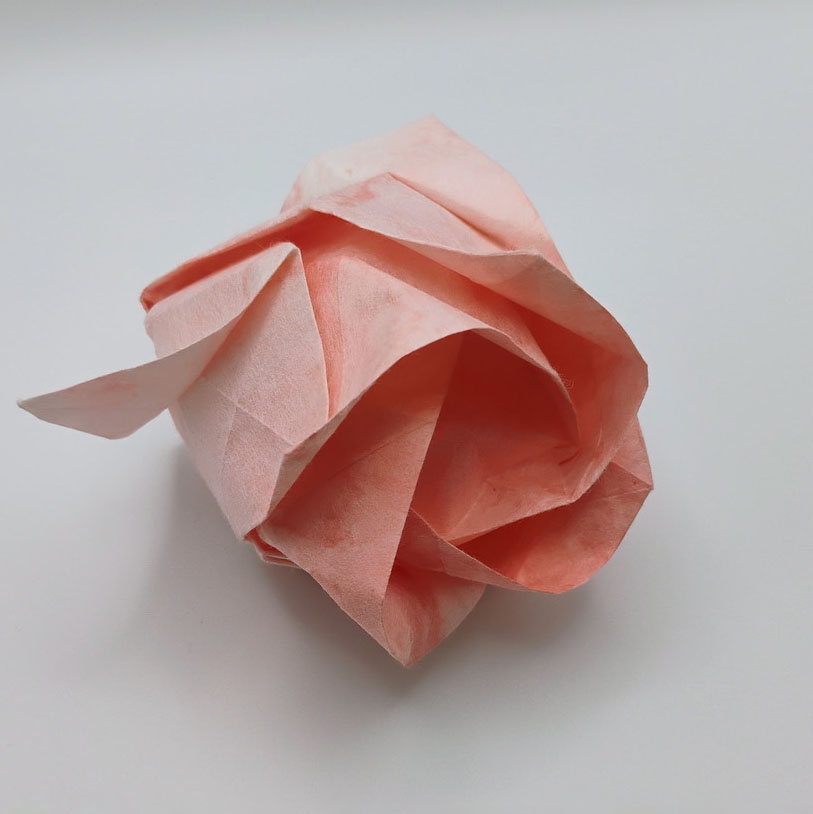
To honor Toshikazu Kawasaki, who died on March 4, 2026, Laura Rozenberg, the editor of The Paper, OrigamiUSA’s print magazine, put out a call through our member email list for photographs of Kawasaki roses. As Laura writes, however, “People began to send roses, but some sent other models, so I decided to give people a couple more days and announced that they could send photos of other models in addition to the Kawasaki rose.”

The response was too great for publication in The Paper, so Laura asked if we could instead publish the photos in The Fold.

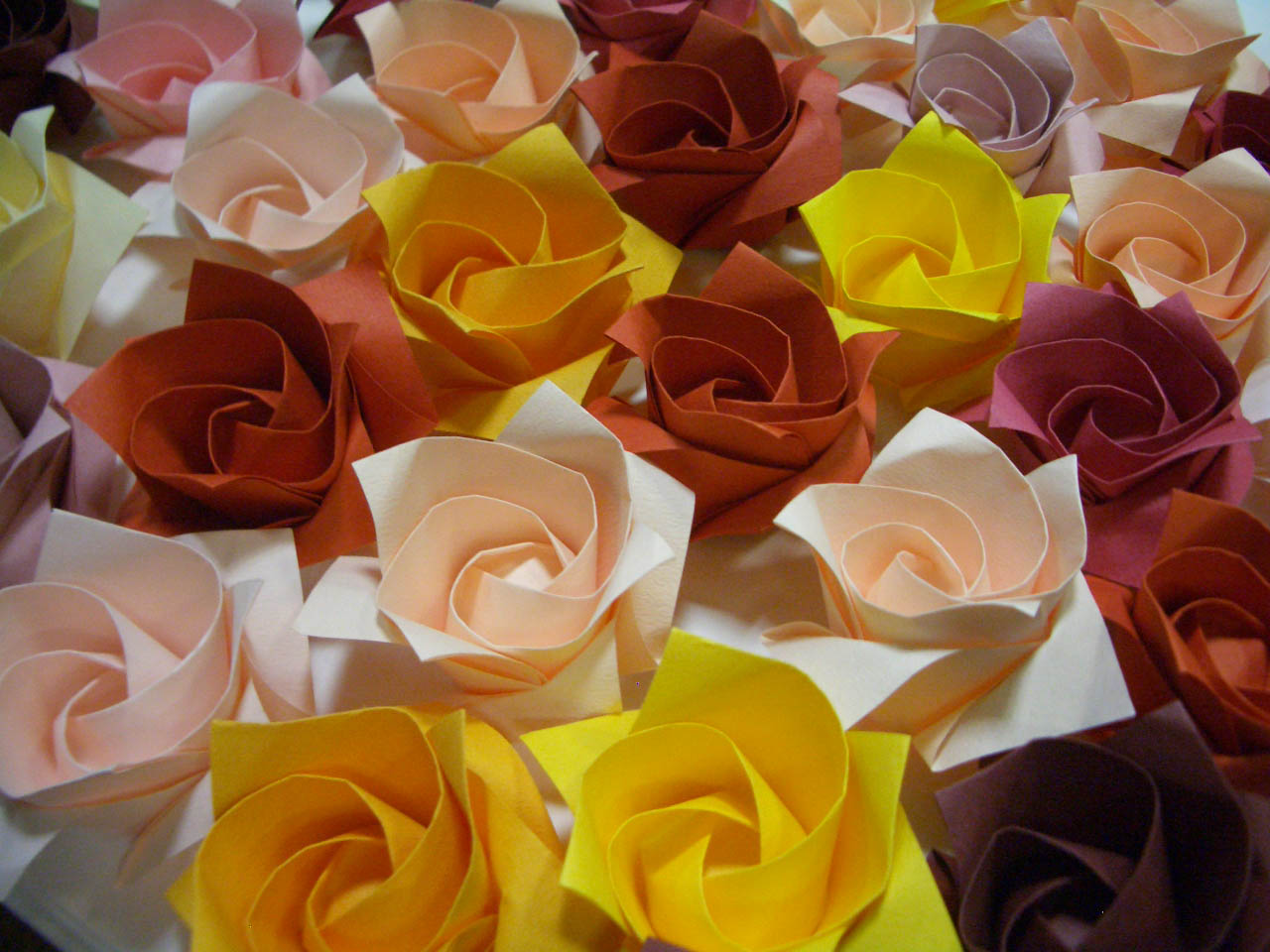
I know of four Kawasaki roses: the most well-known is based on a square grid that runs parallel to the edges of the paper, and you will see many examples here. There is also a Rose with a finer grid at a 22½-degree angle to the edge and a Rose Bud with a color-change calyx. And finally, there is the 1-Minute Rose, which Kawasaki (and few others) could actually fold in a minute. Kawasaki also made tessellations based on some of these roses. You will see examples of all of these here, along with some other treasured designs.

Kawasaki-san brought joy to so many, and this outpouring of photos is one indication of how beloved he was and how much he will be missed. – Jane Rosemarin
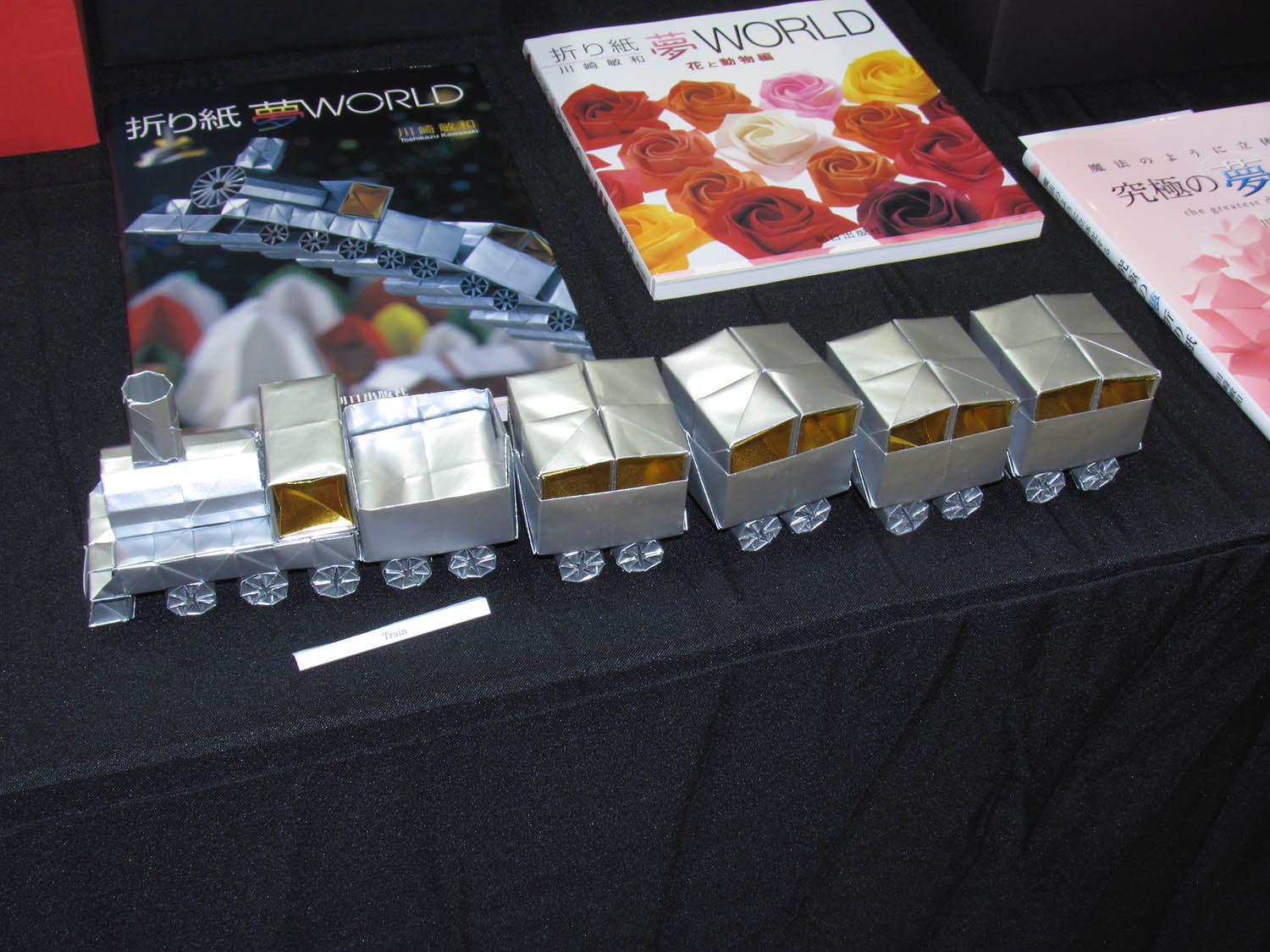
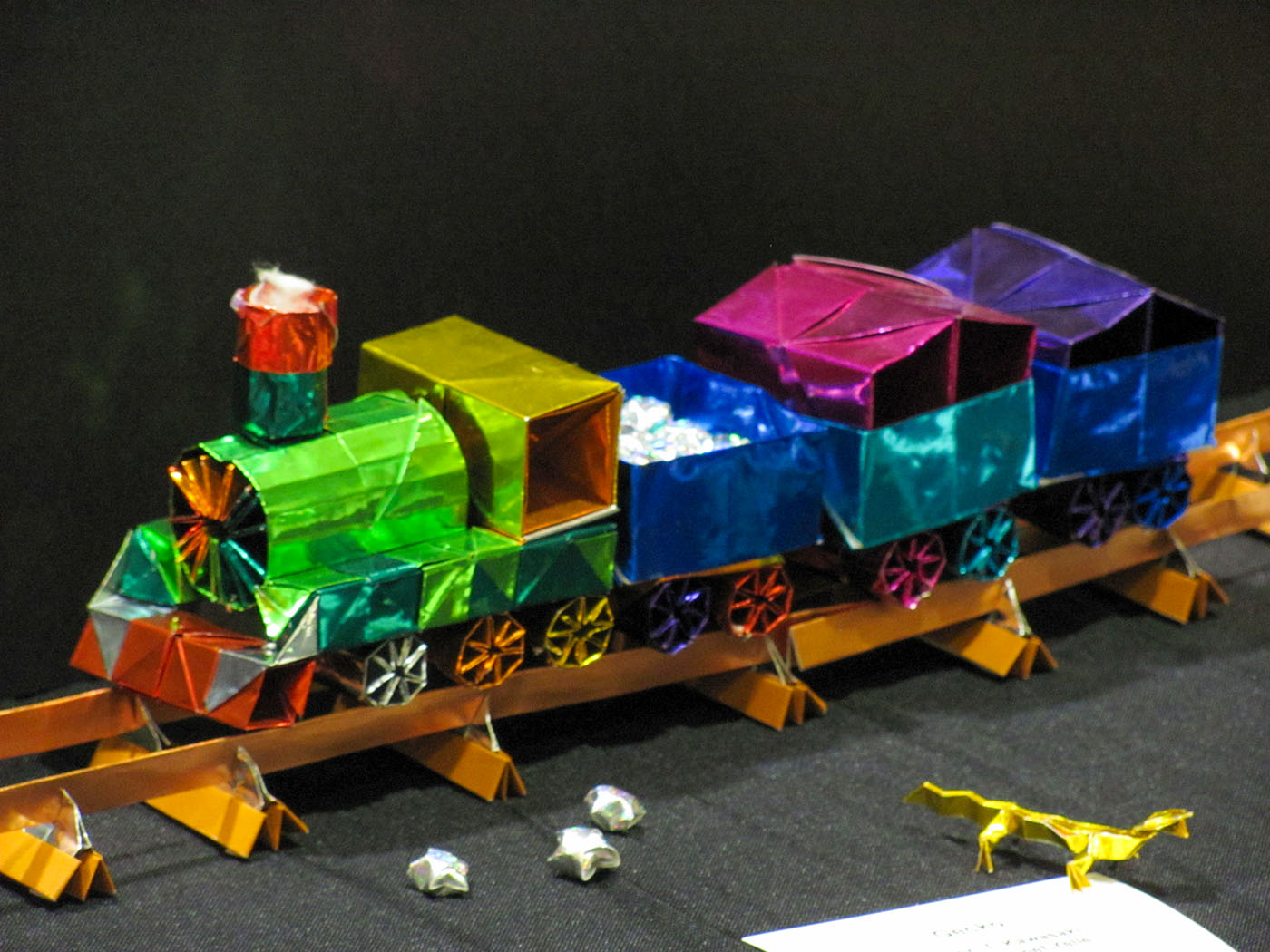
Kawasaki by Kawasaki: Train folded by Toshikazu Kawasaki. Photographed by Janet Yelle. 1-Minute Rose folded by the master, on display at Patsy Wang-Iverson’s home. Photographed by Patsy Wang-Iverson.
rose bud 22.5 degree rose
The Rose Bud with color-change calyx and the Rose with 22½-degree skewed grid. The calyx for the latter, folded from a separate sheet, was designed by Tomoko Fuse. Folded and photographed by Jane Rosemarin. Most of the rose photos submitted by members show the “classic” Kawasaki Rose.
Kawasaki’s Train folded and photographed by Janet Yelle. From Janet: “A little background on why it is multi-colored: We’ve been decorating holiday trees with origami at our local Shriner’s hospital in Springfield, Mass. for many years, and I made the train to put on the tree. I made it colorful for the kids. The tradition of doing the trees was started by Bob and Eunice Stack, who volunteered there. I got involved later on and eventually took over from them. If you look closely at the photo, you can see a white wisp of smoke in the smokestack. Bob Stack had suggested using a bit of cotton to produce that effect.”
Various roses folded and photographed by Luciana Souto Farias.
Photographed and folded by Aviva Meyer.
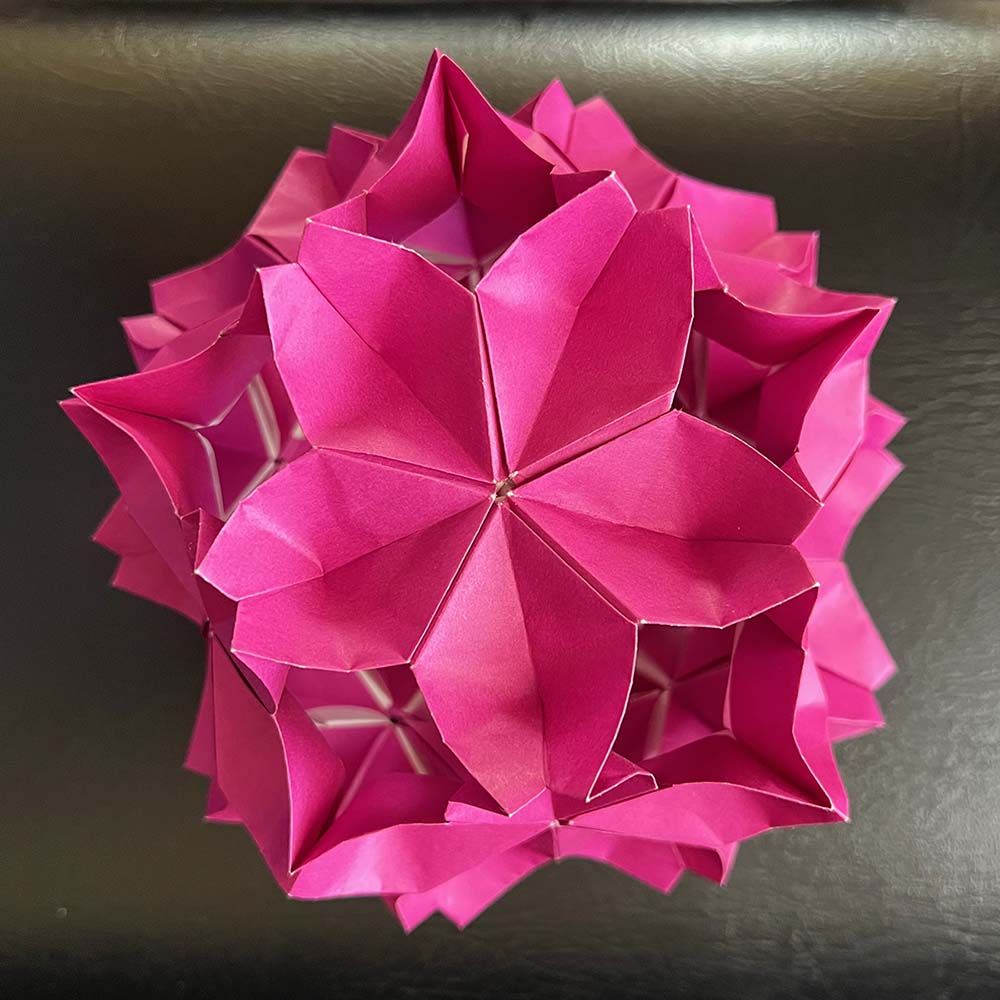
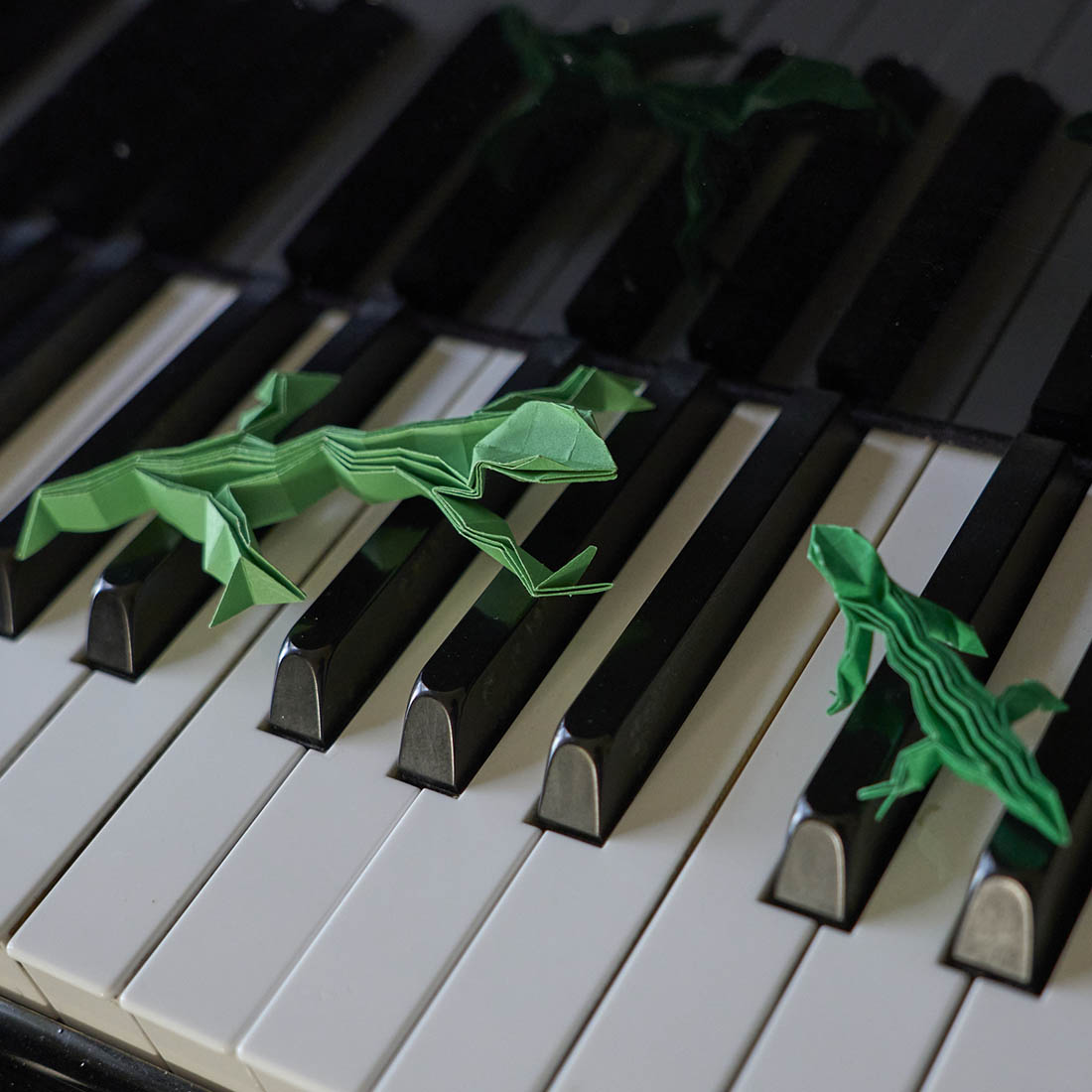
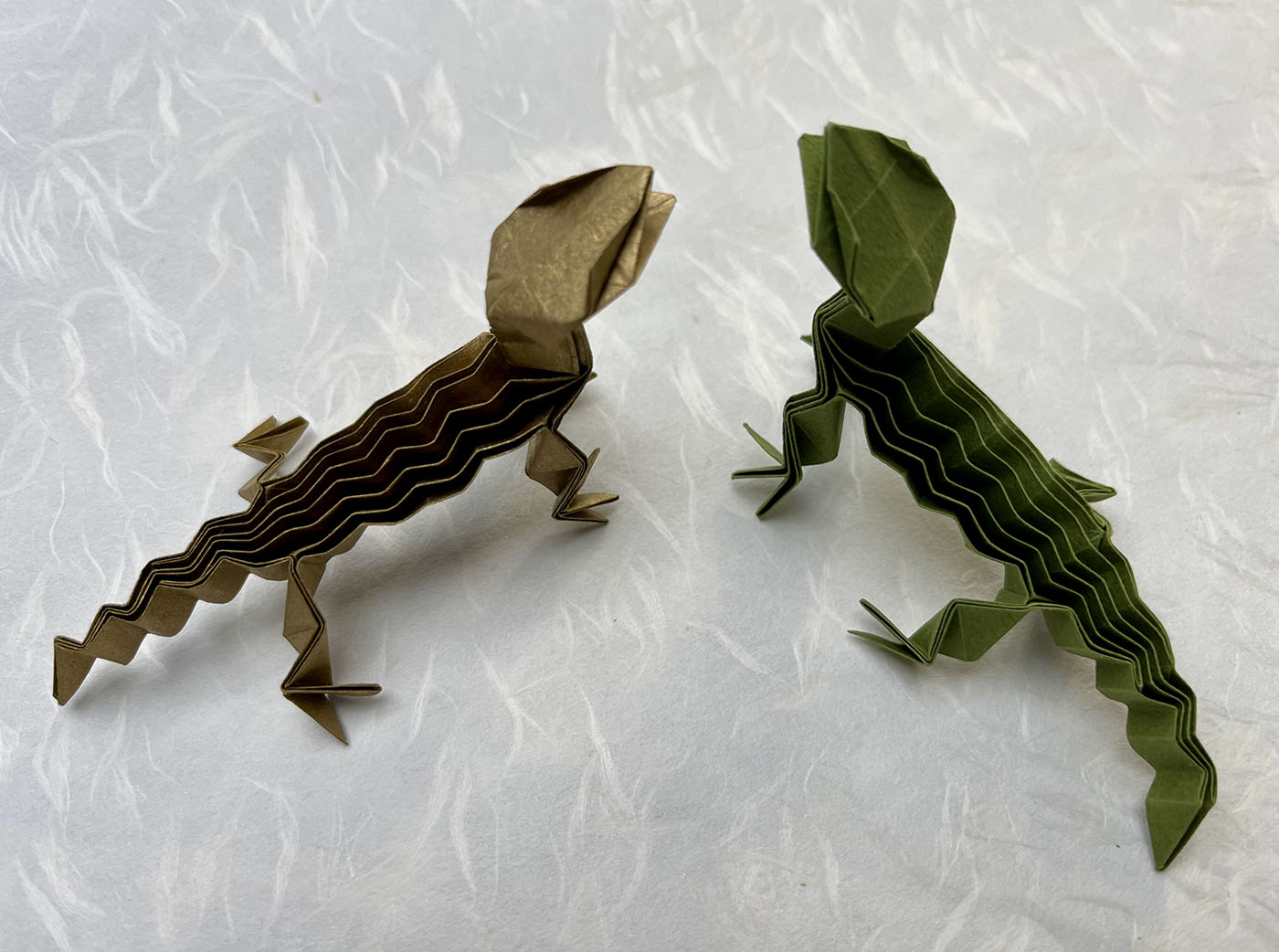
Sakura Ball and Lizard Folded and photographed by Aviva Meyer.
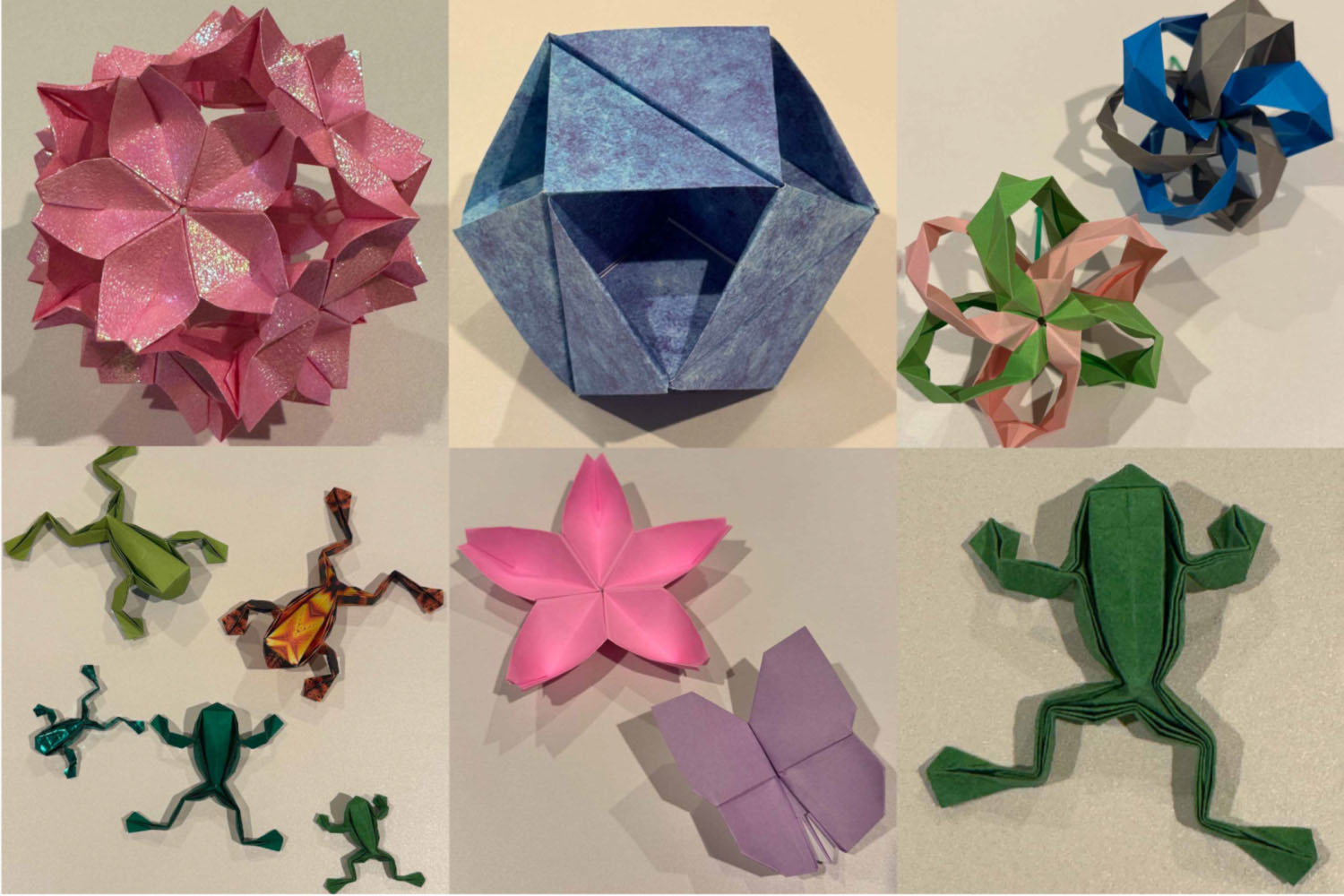
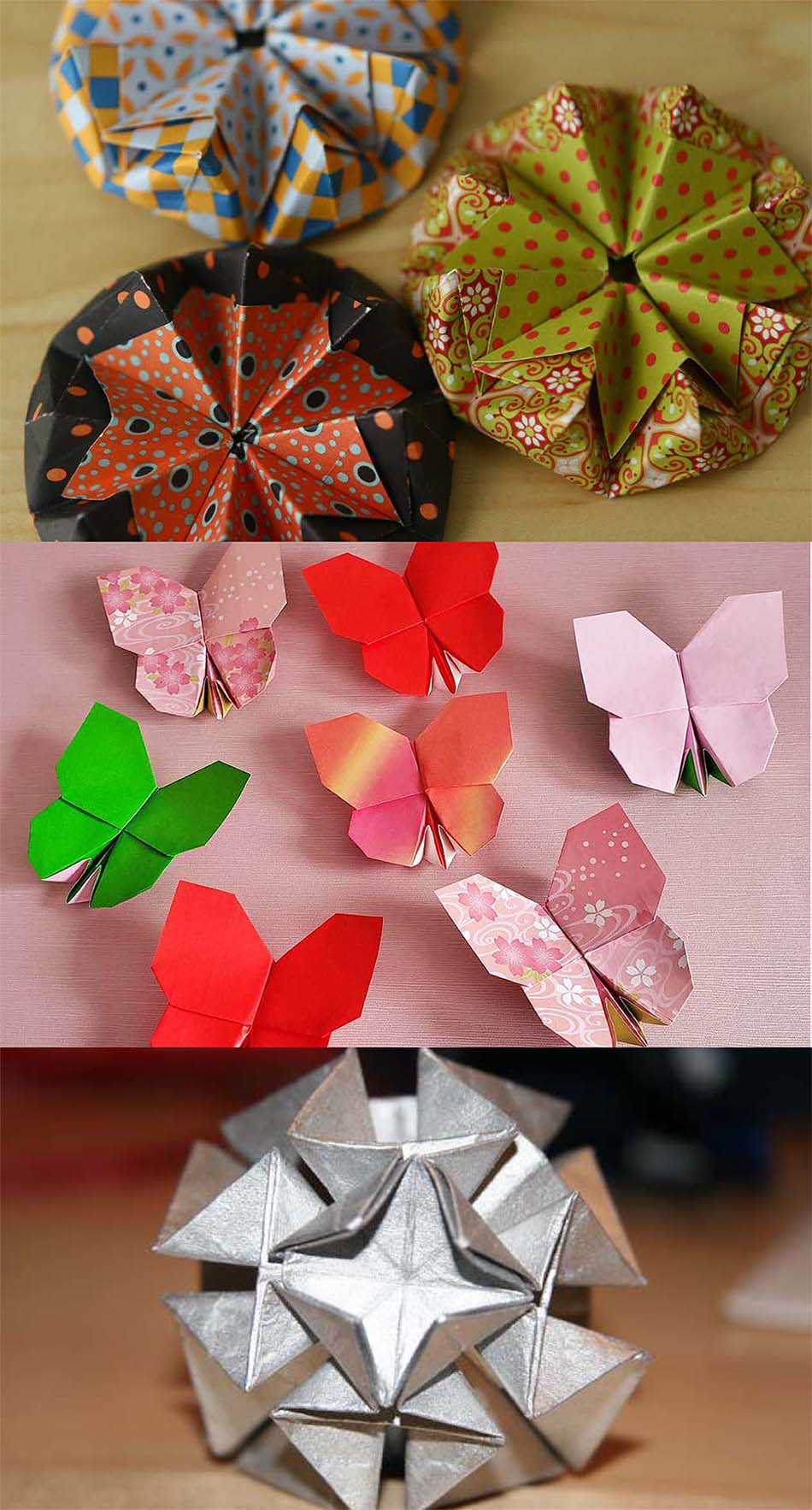
Clockwise from top left: Sakura Ball, Ore (Cubeoctahedron), Seeds of Wind, a single Frog, Sakura and Butterfly, a group of Frogs. Folded and photographed by Janet Yelle.
An array of roses folded and photographed by Wendy Zeichner.
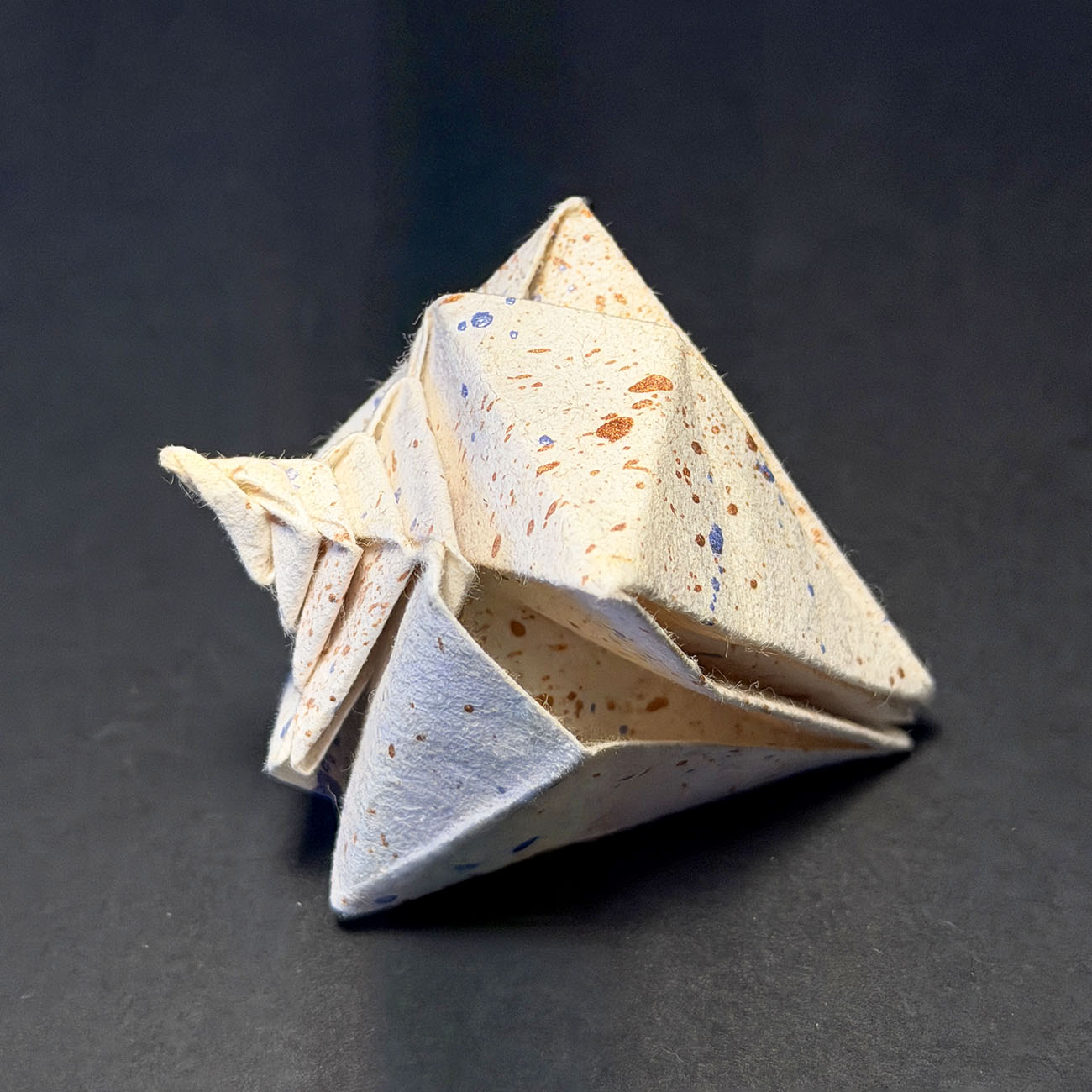
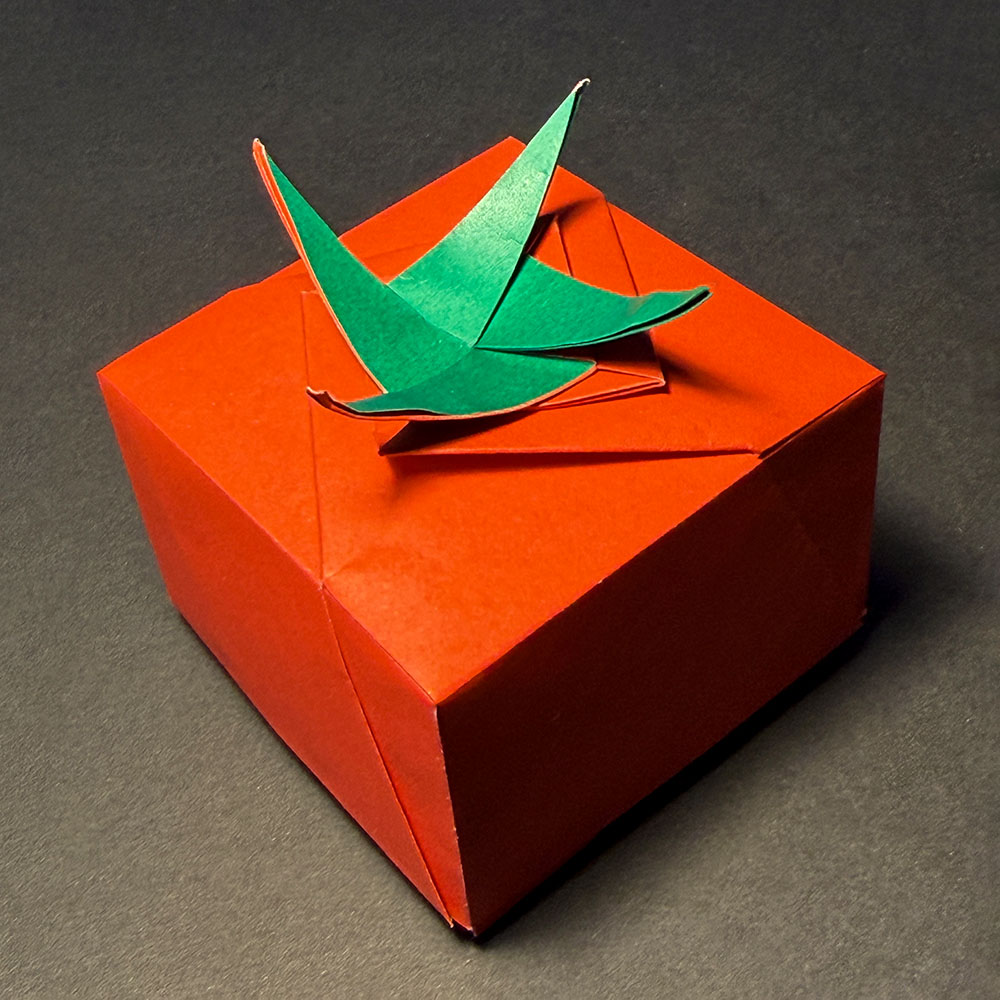
Sea Snail Shell and Tomato Box folded and photographed by Jane Rosemarin.
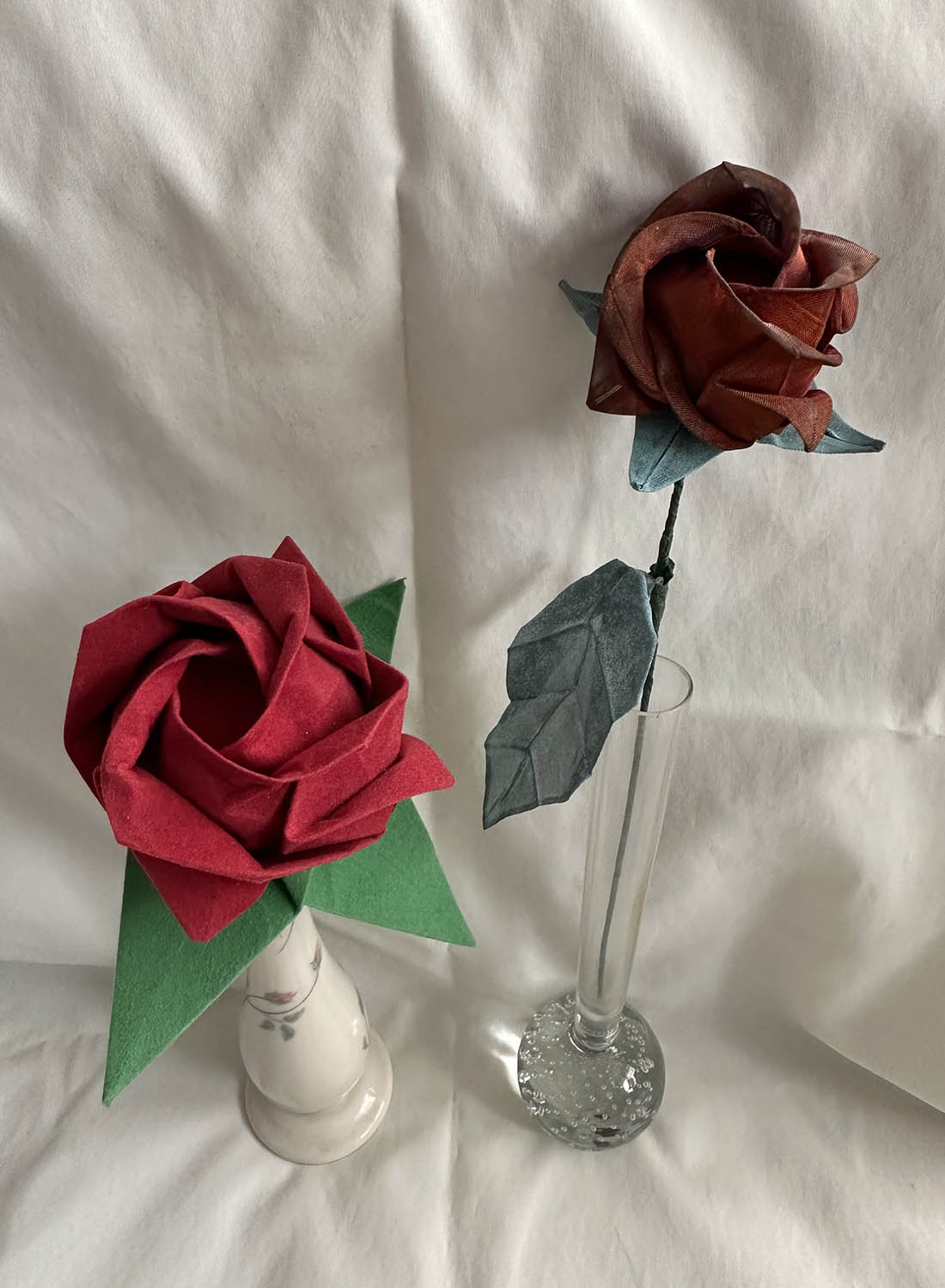
The Rose on the left is from a flocked velvety paper. The Rose on the right is from copper mesh that was baked in a toaster oven to develop the red color. The leaf on the right is copper mesh treated with Miracle Gro to develop the green patina. Folded and photographed by Janet Hamilton.
rose
Janet Hamilton writes “The background wallpaper on my phone has always been a Kawasaki Rose folded from copper mesh. I learned the one-minute rose from him at a convention.”
Folded and photographed by Scott Gold.
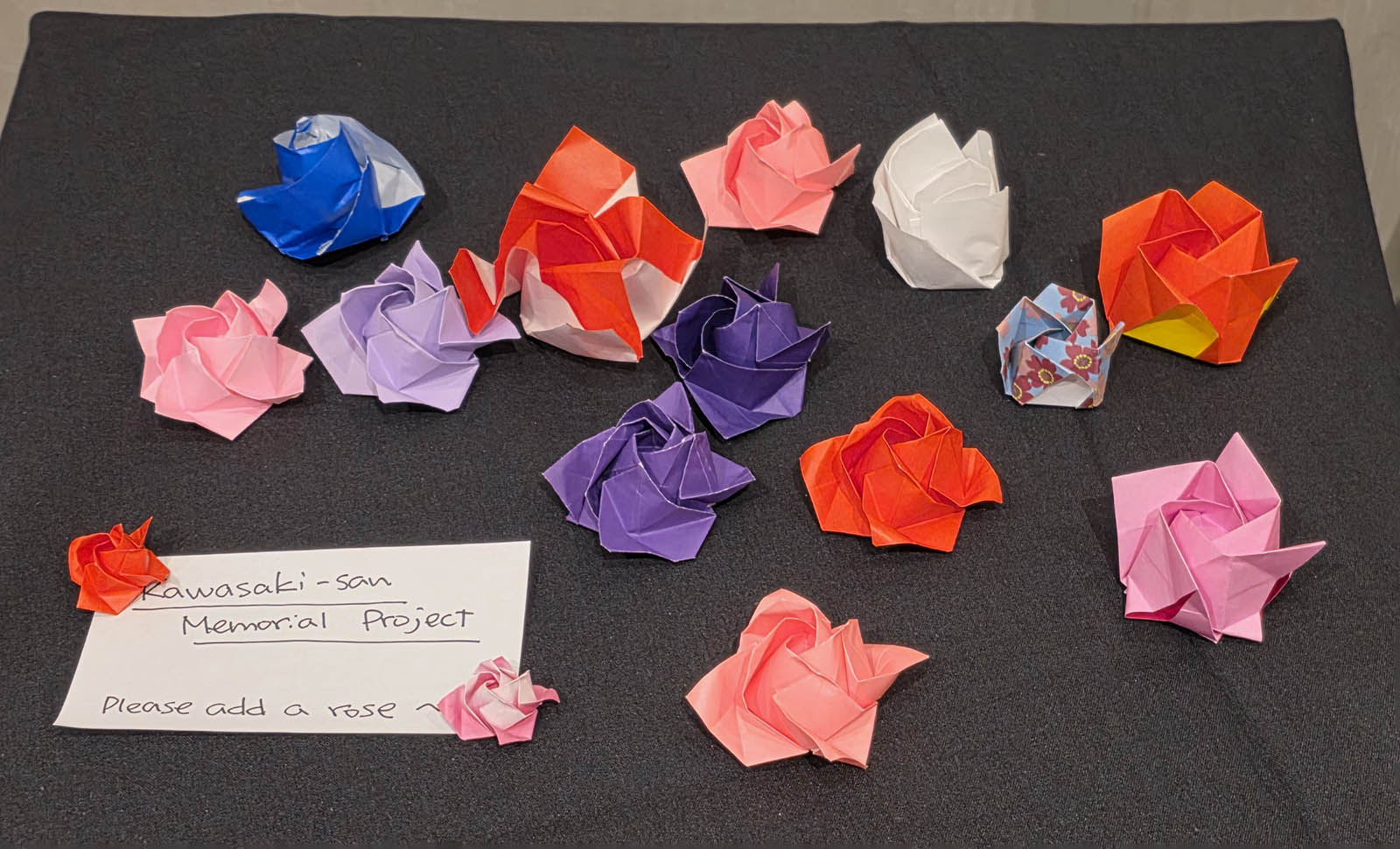
A memorial organized by Ayumi Hayatsu at CoCon 2026 (The Chicago OrigamiUSA convention, held March 6-8 2026) with various roses folded by attendees in memory of Toshikazu Kawasaki.
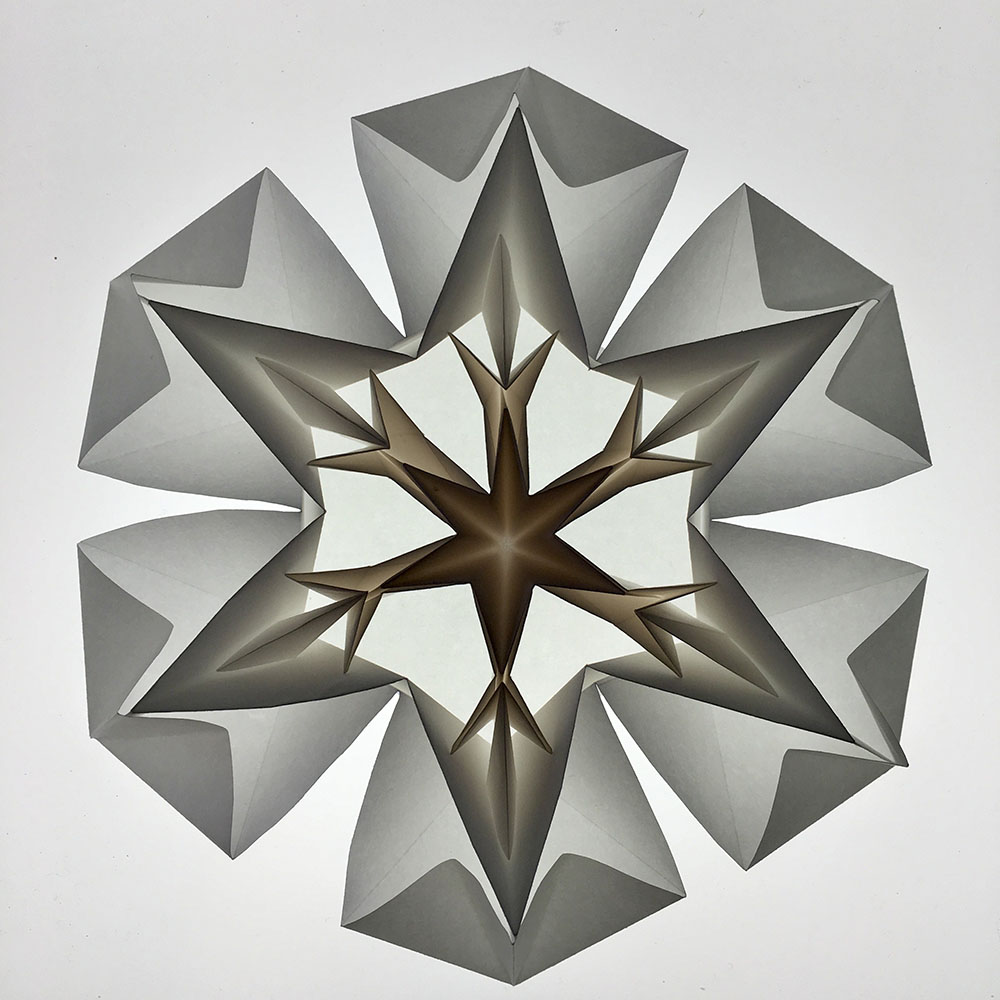
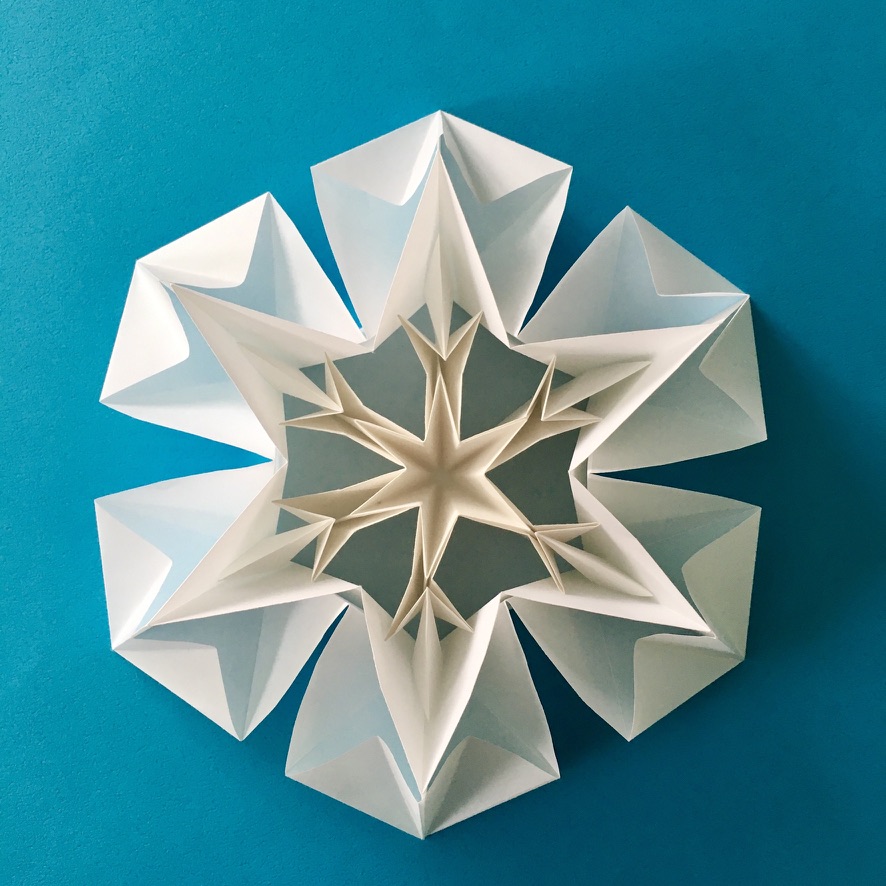
Two views of the Composite Snowflake. Papers: kami 25 cm hexagon & Clearprint Drafting #1000H 60 gsm 20 cm hexagon. Diagrams in “The Greatest Dream Book.” Folded and photographed by Sharlene Wein.
A Rose. Folded and photographed by Janet Yelle.
Folded and photographed by Sandra Congreve. From Sandra: “Here is one of my favorite models, Lizard, learned from Mr. Kawasaki during the OrigamiUSA PCOC convention in Portland, Ore. In 2019.”
Flower-Cut Hard-Boiled Egg, Butterflies and Pine Cone. Folded and photographed by Joyce Tomas.
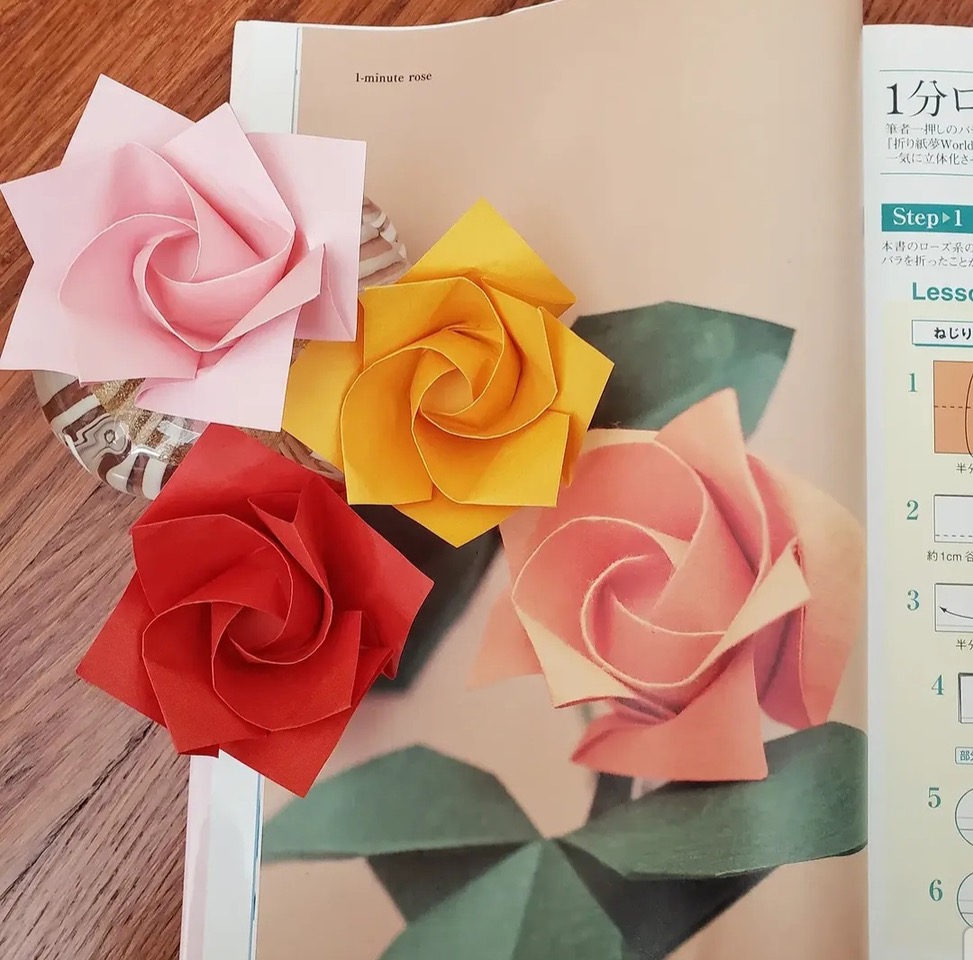
At left is an arrangement of three 1-Minute Roses by Joyce Tomas, who placed them on the opening pages of instructions in Kawasaki’s “The Greatest Dream Origami.” The salmon-colored rose and the leaves appear on the printed page. At right is another 1-Minute Rose, folded by Alexander Roa.
Another 1-Minute Rose, folded by Ansel Unger.